
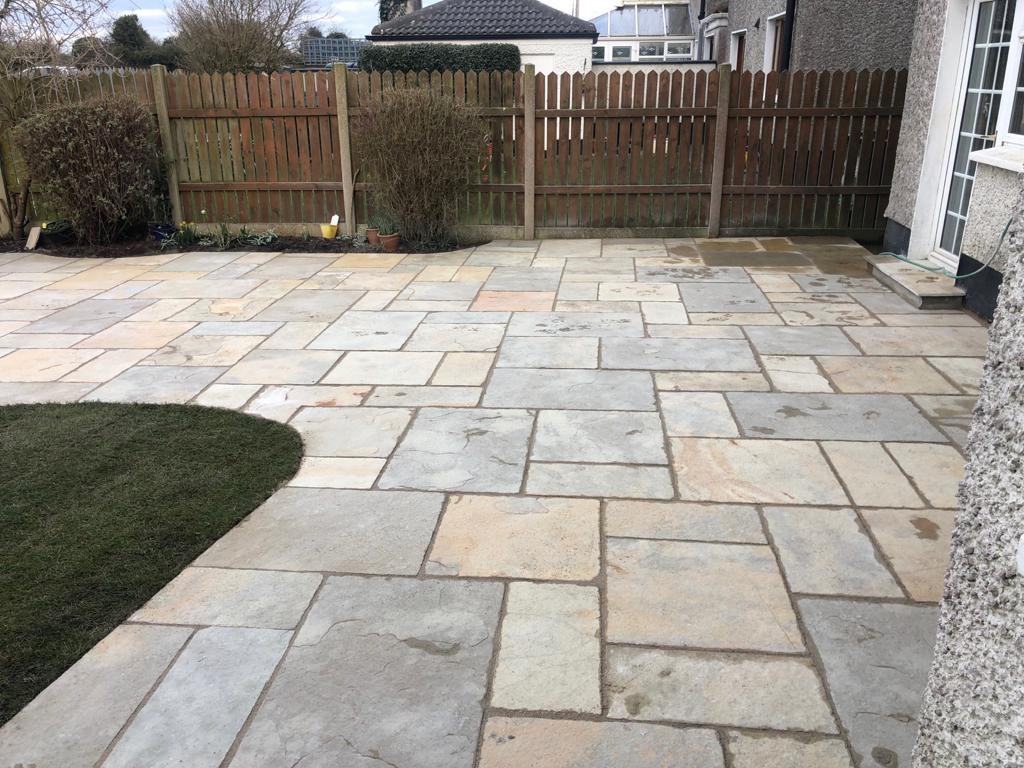
Proper base preparation determines whether your patio will last decades or develop problems within years. The foundation work beneath your chosen surface material requires specific techniques and materials to handle Falmouth’s coastal climate effectively.
Base preparation involves excavating to the correct depth, creating proper drainage layers, and establishing a stable foundation. This groundwork must account for soil type, water drainage, and the weight load your patio will carry over time.
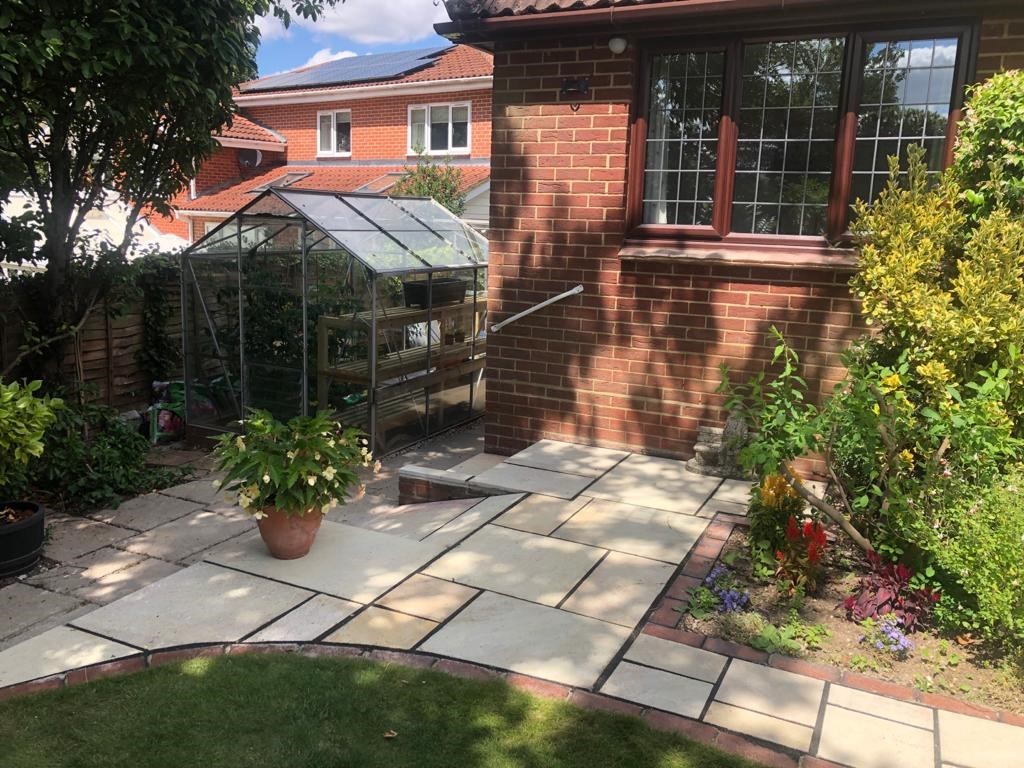
Proper excavation depth is crucial for patio longevity. Most patios require excavation between 150-200mm deep, though professional contractors determine specific requirements based on soil conditions and intended use. This depth accommodates the sub-base, bedding layer, and paving materials whilst ensuring adequate drainage and structural stability.
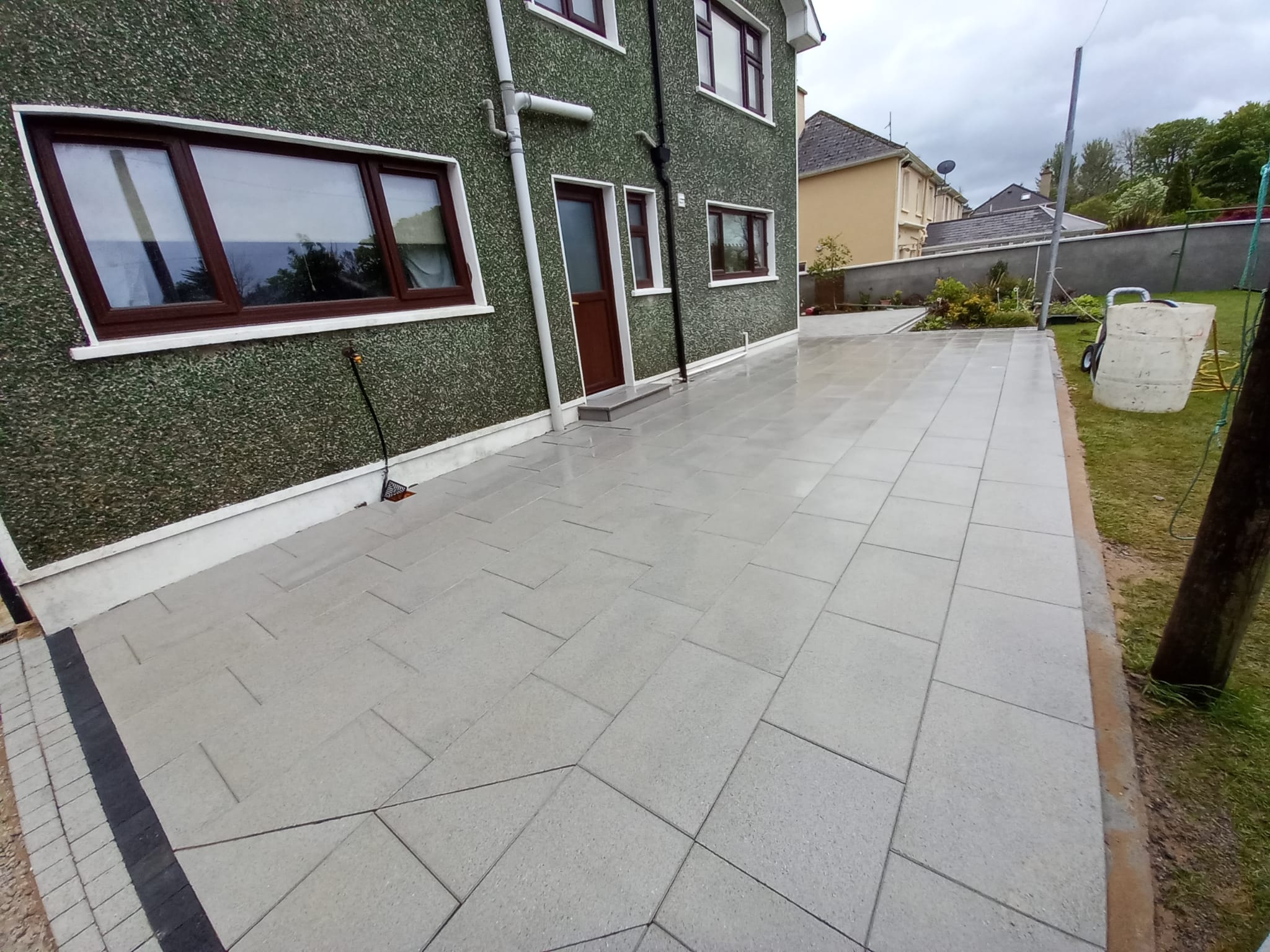
Most patios require excavation between 150mm to 200mm deep, depending on your chosen surface material and local ground conditions. Natural stone and concrete slabs need deeper bases than lighter materials like porcelain tiles.
The excavation must extend 100mm beyond your patio edges on all sides. This extra space accommodates edge restraints and prevents the patio from shifting or spreading over time.
Essential Base Layers
Professional patio bases use a three layer system for maximum stability:
- Bottom layer: Type 1 crushed stone (100mm thick) for primary drainage and load distribution
- Middle layer: Sharp sand or grit sand (25mm to 40mm) for levelling and adjustment
- Top layer: Mortar bed or laying course specific to your surface material
Each layer requires proper compaction using a mechanical plate compactor. Hand tamping cannot achieve the density needed for long term stability.
Drainage and Water Management
Falmouth’s rainfall demands excellent drainage beneath every patio. The base should slope away from buildings at a minimum gradient of 1 in 80, with 1 in 60 preferred for better water clearance.
Installing land drains or French drains around the patio perimeter prevents water pooling beneath the surface. This step proves essential in clay soils or areas with poor natural drainage.
Compaction and Final Checks
Compact each layer separately, working in sections across the entire area. The base should feel firm underfoot with no soft spots or movement when walked on.
Check levels constantly using a long straight edge and spirit level. Correcting levels becomes much harder once the laying course goes down.